

 Rohit
Rohit
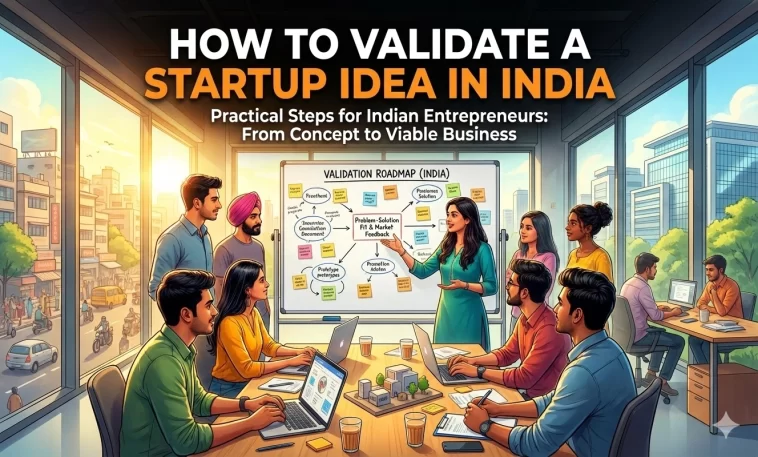
Validating a startup idea is one of the smartest steps an aspiring entrepreneur can take before investing time or money. Many Indian founders jump straight into building a product only to discover later that customers were never interested in the first place. A strong validation process helps you understand real market needs, measure demand, and test whether people are willing to use or pay for your solution.
The good news is that idea validation does not require a big budget. With the right methods, you can validate your concept for free using digital tools, public data, and direct feedback from your target audience. This guide explains practical steps Indian entrepreneurs can use to validate a startup idea without spending money.
Why Startup Idea Validation Matters in India
India is a fast growing startup ecosystem with increasing competition in almost every industry. Validating your startup idea early helps you achieve the following benefits:
1. Avoid Building Something No One Wants
Most failed startups misjudge product market fit. Validation helps keep your idea grounded in real user needs.
2. Reduce Risks and Unnecessary Costs
Instead of building a full product, you test the concept first. This saves money, resources, and months of development time.
3. Improve Your Idea with Data
Feedback helps refine your idea into something users actually value.
4. Build Confidence Before Pitching
Investors prefer founders who back their ideas with proof. Validation helps strengthen your pitch.
Step by Step Guide to Validate a Startup Idea in India Without Spending Money
Step 1: Define the Problem Clearly
Every strong startup begins with a problem that people truly want solved. Start by answering these questions:
- What exact problem am I solving?
- Who faces this problem?
- How do they currently solve it?
- Is the problem frequent or occasional?
How to Validate This Step for Free
Look up questions people ask on platforms like Quora and Reddit India. Observe conversations in WhatsApp groups, Facebook groups, and local forums. Talk to your colleagues, students, or professionals in your target market.
Step 2: Check Demand With Free Market Research Tools
Use free online tools to understand demand trends.
Free Tools to Use
Google Trends, YouTube search, government data portals, social media hashtags.
What You Learn
You discover whether there is a market and whether it is growing.
Step 3: Study Competitors Without Spending Money
Competition proves that the market exists and that users care about the problem.
How to Do it for Free
Google search, app store reviews, competitor websites, LinkedIn pages.
What You Learn
You understand market gaps, complaints, and opportunities.
Step 4: Talk Directly to Your Target Audience
Real user feedback is the strongest proof.
Methods to Use
WhatsApp groups, Telegram communities, Google Forms, direct interviews.
Questions to Ask
Would you use this? What features matter most? How do you currently solve this problem? What pricing feels right?
Step 5: Create a Simple Landing Page for Free
A landing page helps you test interest without building anything.
Tools You Can Use
Google Sites, Carrd free plan, Notion public pages.
What to Include
Problem, solution, features, call to action, early access button.
Step 6: Build a Free Prototype or Mockup
Help users visualize your idea.
Best Free Tools
Figma, Canva, MarvelApp.
Why This Works
People react better to visuals than text.
Step 7: Create a Waitlist or Early Signup Test
This provides real evidence of demand.
How to Do it for Free
Google Forms, Google Sites, Notion pages.
Step 8: Share Your Concept in Startup Communities
Experienced founders provide honest and practical feedback.
Communities to Use
Reddit r/startups, LinkedIn groups, Telegram channels, Product Folks groups.
Step 9: Conduct a Social Proof Test
Check how people react publicly.
Methods to Try
Instagram polls, LinkedIn posts, YouTube comments, Facebook group polls.
Step 10: Measure Willingness to Pay
This is the strongest validation metric.
How to Do It
Ask pricing questions in surveys, add pricing to landing pages, run mock sales conversations.
Signs That Your Startup Idea Is Validated
- Strong survey responses
- Early signups
- Positive reactions
- Useful prototype feedback
- Clear competitor demand
- Signs of willingness to pay
Common Mistakes to Avoid During Validation
- Only asking family or friends
- Ignoring competitor analysis
- Building too early
- Dismissing negative feedback
- Not testing pricing
- Relying only on surveys
Table: Free Tools and Methods for Startup Idea Validation in India
| Validation Step | Free Tools You Can Use | What It Helps You Learn |
|---|---|---|
| Market Research | Google Trends, Statista free data, industry reports, social media searches | Understand demand, audience interest, growth potential |
| Competitor Analysis | Google search, app stores, LinkedIn, X (Twitter) | Identify existing players, gaps, opportunities |
| Problem Validation | Reddit India, Quora, LinkedIn polls, Telegram groups | Check if the problem is real and common |
| Initial Feedback | WhatsApp groups, LinkedIn posts, Google Forms | Collect raw opinions from users |
| Landing Page Test | Google Sites, Carrd free plan | Measure interest and clicks before launching |
| Prototype Testing | Canva, Figma free version | Show a mockup to test reactions |
| Audience Surveys | Google Forms, Typeform basic | Understand needs, preferences, willingness to pay |
| Social Proof Test | Instagram polls, Facebook groups, YouTube comments | Measure how many people show interest |
| Demand Simulation | Waitlist pages, early signup forms | Check if people are willing to join or register |
| Community Feedback | Startup communities on Telegram, Slack, Reddit, LinkedIn | Learn from experienced founders and potential customers |
FAQ’s – (Frequently Asked Questions)
Q1. How long should it take to validate a startup idea in India?
Most ideas can be validated within two to four weeks using free tools, user interviews, and simple landing page tests.
Q2. Do I need a prototype for validation?
A prototype is not mandatory, but it helps people understand your idea better. A simple Canva or Figma mockup can be enough.
Q3. How many people should I interview during validation?
Aim for at least 20 to 50 people from your target audience. This sample size provides more accurate insights.
Q4. Is it necessary to study competitors?
Yes. Competitors prove that the market exists. Studying them helps you discover gaps and opportunities.
Q5. How do I know if people are willing to pay for my idea?
Add simple pricing questions in surveys, include pricing on your landing page, or ask users during interviews whether they would pay for the solution.
Q6. What if my idea receives mixed feedback?
Mixed feedback is normal. Look for patterns instead of focusing on individual responses.
Q7. Can validation be done without coding or building anything?
Yes, most validation methods like surveys, landing pages, and prototypes require no coding experience.
You Might Also Find This Useful:
- Is MBA Required to Be Successful in Your Business?
- Vineeta Singh Success Story: From Emcure To Shark Tank Fame
Final Thoughts:
Validating a startup idea does not require money. What it needs is curiosity, research, and a willingness to test your assumptions. Free tools and simple methods can help you understand real demand, refine your concept, and build something people truly want. Whether you are a student, a working professional, or an aspiring founder in India, strong validation gives your startup the foundation it needs to grow successfully.
